Development of lightweight radiation shielding material for spacecraft and deep space habitat internal protection
 |
Rövid név |
- |
| Azonosító |
ESA RFP/3-18846/25/NL/PA/pt |
| Kezdete |
28/01/2026 |
| Vége |
27/01/2027 |
| Szakmai vezető az Atomkiban |
|
In this work, we aim to increase the efficiency of radiation shielding for the interiors of spacecraft (Orion), space stations (Lunar Orbital Platform Gateway) and deep space habitats for manned missions to the Moon and Mars. We aim to increase the efficiency by minimizing the mass of the applied shielding for the radiation exposures occurring during a given mission and the required level of protection against well-defined radiation damage (measurable and well-estimated by model calculations). To achieve this, we aim to optimize the material characteristics (chemical composition, material structure forms, layering and geometry) of various radiation shielding materials. ATOMKI participates in the work primarily through model calculations and accelerator testing.
Partners of the consortium: Genevation Aircraft Ltd, Thales Alenia Space, University of Debrecen, HUN-REN ATOMKI
Total budget: 300,000 EUR, from which ATOMKI received: 60,000 EUR
|
Thin-layer scintillators for future detectors in space
 |
Rövid név |
- |
| Azonosító |
ESA 4000145343 |
| Kezdete |
01/09/2024 |
| Vége |
30/11/2025 |
| Weboldal |
|
| Szakmai vezető az Atomkiban |
|
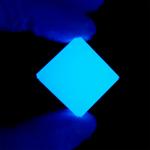
This project has been research and development activity carried out under ESA contract 4000145343 by HUN-REN Institute for Nuclear Research. The technical basis for this work is the thin-layer production technology formerly developed within the cooperation of the HUN-REN Institute for Nuclear Research and the University of Szeged.
The thin layers are synthesized of copper-halide perovskites, which exhibit strong luminescence following the exposure to external radiation. We selected the Cs3Cu2I5 (CCI325) composition for the development of a scintillator-based charged-particle detector, which produced comparable light yield to conventional inorganic scintillators. Under this contract we conceptualized a device constructed of a CCI325 thin layer, which has high application potential for monitoring cosmic radiation in space.
Budget: 98,484 EUR
|
Research Infrastructure Access in Nanoscience & Nanotechnology
 |
Rövid név |
RIANA |
| Azonosító |
Horizon Europe 101130652 |
| Kezdete |
01/03/2024 |
| Vége |
29/02/2028 |
| Weboldal |
|
| Szakmai vezető az Atomkiban |
|
RIANA unites 7 European networks of top-level research infrastructures to provide advanced techniques for nanofabrication, characterization and simulation. It offers efficient access to 69 research infrastructures through a single-entry point. RIANA aims to attract both experienced and new users from academia and industry, adapting to emerging scientific topics and needs.
- Project coordinator: Deutsches Elektronen-Synchrotron, DESY (Hamburg, Germany)
- Members: 56 consortium partners from 22 European countries
- Role of ATOMKI: Transnational Access provider, provides beamtime for external users at the Tandetron particle accelerator
- Budget of the whole project: 15 MEUR
- Of which budget of ATOMKI: 35,700 EUR
|
European Research Infrastructure for Heritage Science Implementation Phase
 |
Rövid név |
E-RIHS IP |
| Azonosító |
HORIZON-INFRA-2021-DEV-02 Project No. 101079148 |
| Kezdete |
01/10/2022 |
| Vége |
31/12/2024 |
| Weboldal |
|
| Szakmai vezető az Atomkiban |
|
Research capacities and resources are crucial to enhancing the understanding, care and sustainable use of heritage to enrich people’s lives, both today and in the future. The mission of the European Research Infrastructure for Heritage Science (E-RIHS) is to deliver integrated access to interdisciplinary expertise, data and cutting-edge technologies. The E-RIHS Implementation Phase (E-RIHS IP) partnership brings together representatives of the national nodes of the countries that expressed their willingness to support the establishment of the ERIC (European Research Infrastructure Consortium). It aims at preparing E-RIHS ERIC to become operational in the field of heritage science at the European and global level.
The consortium involves 14 European partners and is lead by National Research Council (CNR, Italy).
The EU contribution to the project is 1.4 MEUR, from which ATOMKI received 34 kEUR.
|
Integrated Platform for the European Research Infrastructure ON Heritage Science
 |
Rövid név |
IPERION HS |
| Azonosító |
H2020-INFRAIA-2019-1, Grant Agreement No. 871034 |
| Kezdete |
01/04/2020 |
| Vége |
31/03/2024 |
| Weboldal |
|
| Szakmai vezető az Atomkiban |
|
The IPERION HS project contributes to establishing a unique pan-European infrastructure in heritage science by integrating facilities at research centres, universities and museums. The consortium of 24 partners from 23 countries (with Italy as project leader) offers access to instruments, methodologies and data for advancing knowledge and innovation in the interpretation, documentation, conservation and restoration of cultural heritage through three complementary platforms, ARCHLAB, MOLAB, and FIXLAB.
The Laboratory for Heritage Science of Atomki is part of FIXLAB, using ion beam analytical techniques at the Tandetron accelerator for determination of the concentration and distribution of elements in art and archaeological objects. Furthermore, the Laboratory participates in joint research activity, developing analytical monitoring strategies to prevent potential damage of the object during measurement under intense ion beams.
|
Establishment of an International Radiocarbon AMS Competence and Training (INTERACT) Center
 |
Rövid név |
INTERACT |
| Azonosító |
GINOP-2.3.4-15-2020-00007 |
| Kezdete |
11/02/2020 |
| Vége |
31/03/2023 |
| Weboldal |
|
| Szakmai vezető az Atomkiban |
|
The aim of the project is to establish an internationally competitive AMS C-14 competence centre which is able to develop and market new and efficient sample preparation devices for the radiocarbon measurements and to provide high-level training regarding measurement technology.
Based on the scientific background and professional staff of Atomki, together with the equipment development and manufacturing experience of Isotoptech Zrt., a knowledge transfer centre promptly adapting to the worldwide rapidly expanding AMS C-14 analytical demands is going to be established, which is able to serve the recent research approaches and the demands of the market.
| Partners |
Total cost (Ft) |
Support (Ft) |
|
Atomki
leader of consortium
|
870.796.917 |
870.796.917 |
Isotoptech Zrt
member of consortium |
946.222.430 |
524.228.083 |
| Sum |
1.817.019.347 |
1.395.025.000 |
|
The European Research Infrastructure for Heritage Science Preparatory Phase
 |
Rövid név |
E-RIHS PP |
| Azonosító |
H2020-INFRADEV-2016-2, Grant Agreement No. 739503 |
| Kezdete |
01/02/2017 |
| Vége |
30/09/2020 |
| Weboldal |
|
| Szakmai vezető az Atomkiban |
|
The European Research Infrastructure for Heritage Science (E-RIHS) will support research on heritage interpretation, preservation, documentation and management. It will comprise E-RIHS Headquarters and National Hubs, fixed and mobile national infrastructures of recognized excellence, physically accessible archives and virtually accessible data bases. Both cultural and natural heritage will be addressed: collections, buildings, and archaeological sites, digital and intangible heritage. E-RIHS is currently in the Preparatory Phase which will be used to address legal status and governance / management organization. The establishment of a legal structure and governance and the refinement of the business plan for long-term sustainability will be the three most important deliverables, together with demonstrations of user access as implemented by the consortium availing of the existing infrastructure projects.
|
The new Laboratory for Heritage Science at MTA Atomki – Preparing for the participation in E-RIHS
 |
Rövid név |
HSLab (Heritage Science Laboratory) |
| Azonosító |
GINOP-2.3.3-15-2016-00029 |
| Kezdete |
02/01/2017 |
| Vége |
29/07/2020 |
| Weboldal |
|
| Szakmai vezető az Atomkiban |
|
The European Research Infrastructure for Heritage Science (E-RIHS) initiative combines laboratories and museums to create a unique pan-European research infrastructure in the field of the study of tangible cultural and natural heritage. Our goal is to become a node of this multidisciplinary, distributed research facility. The first pillar of the project is to establish an advanced analytical-imaging toolpark that provides information at various size scales on art objects and archaeological findings, without the need for sample preparation. Additionally, we increase the capacity of the AMS (Accelerator Mass Spectrometer) Laboratory to analyze archeological findings and extend the scope of such studies. The new graphitization unit allows for even more reproducible age determination, which can be extended with the carbonate handling option to examine cremation burials. The introduction of the measurement of stable isotopes in bones opens the way for studying past eating habits, too.
|
ICER Centre: Isotope Climatology and Environmental Research Centre
 |
Rövid név |
ICER |
| Azonosító |
GINOP-2.3.2-15-2016-00009 |
| Kezdete |
01/07/2016 |
| Vége |
30/04/2021 |
| Weboldal |
|
| Szakmai vezető az Atomkiban |
|
The aim of this project is to investigate the geo-, hydro- and biosphere of the past and present using isotope geochemical tools in climatology. These techniques are essential to understand the extent and impacts of past and present climate changes. The research direction of the newly-established Isotope Climatology and Environmental Research Centre covers many fields of science; the broad spectrum of state-of-the-art scientific research methodology will include physics, geology, geochemistry, hydrology, atmosphere and climate studies. The project aims to develop and/or phase in new isotopic geochemical methods in our country and in the region. A world-class isotopic climate research centre and knowledgebase will be created as part of the systematic research program in Hungary.
The research project is implemented in the MTA Atomki in Debrecen in close scientific cooperation with local and foreign researchers building on existing infrastructure and methods.
|
Integrated Platform for the European Research Infrastructure ON Culture Heritage
 |
Rövid név |
IPERION CH |
| Azonosító |
|
| Kezdete |
01/05/2015 |
| Vége |
31/10/2019 |
| Weboldal |
|
| Szakmai vezető az Atomkiban |
|
The H2020 IPERION CH project aims to establish a unique pan-European infrastructure in Heritage Science by integrating facilities at research centres, universities and museums. The consortium offers access to instruments, methodologies and data for advancing knowledge and innovation in the conservation and restoration of cultural heritage through three complementary platforms, ARCHLAB, MOLAB, FIXLAB. Calls are published twice a year.
FIXLAB B1: MTA Atomki – Laboratory of Ion Beam Applications
Through determining the concentration and distribution of elements, ion beam analytical techniques can give information on provenance, authenticity, production technology, and degradation due to environmental effects of art and archaeological objects. They also contribute to the elaboration of conservation technologies. Besides in-vacuum measurements with high lateral resolution, an external micro-beam set-up is also available for artefacts of bigger sizes or sensitive nature.
Next deadline: 28 February 2018
Application form
|
1 – 10 mutatva 11 elemből
 Magyar